





Freedom to explore. Responsibility to do it right.
Responsibility at Svala
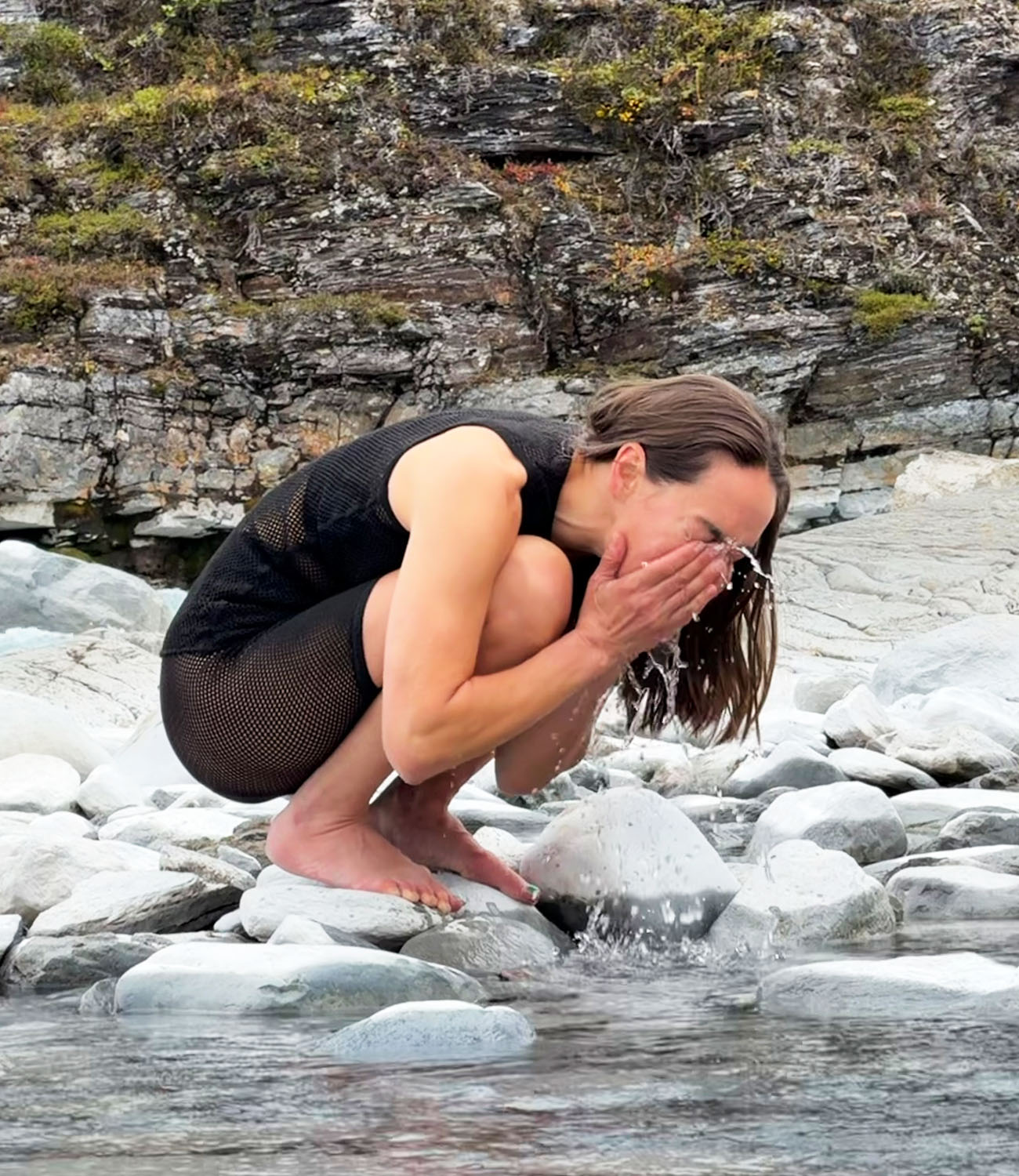
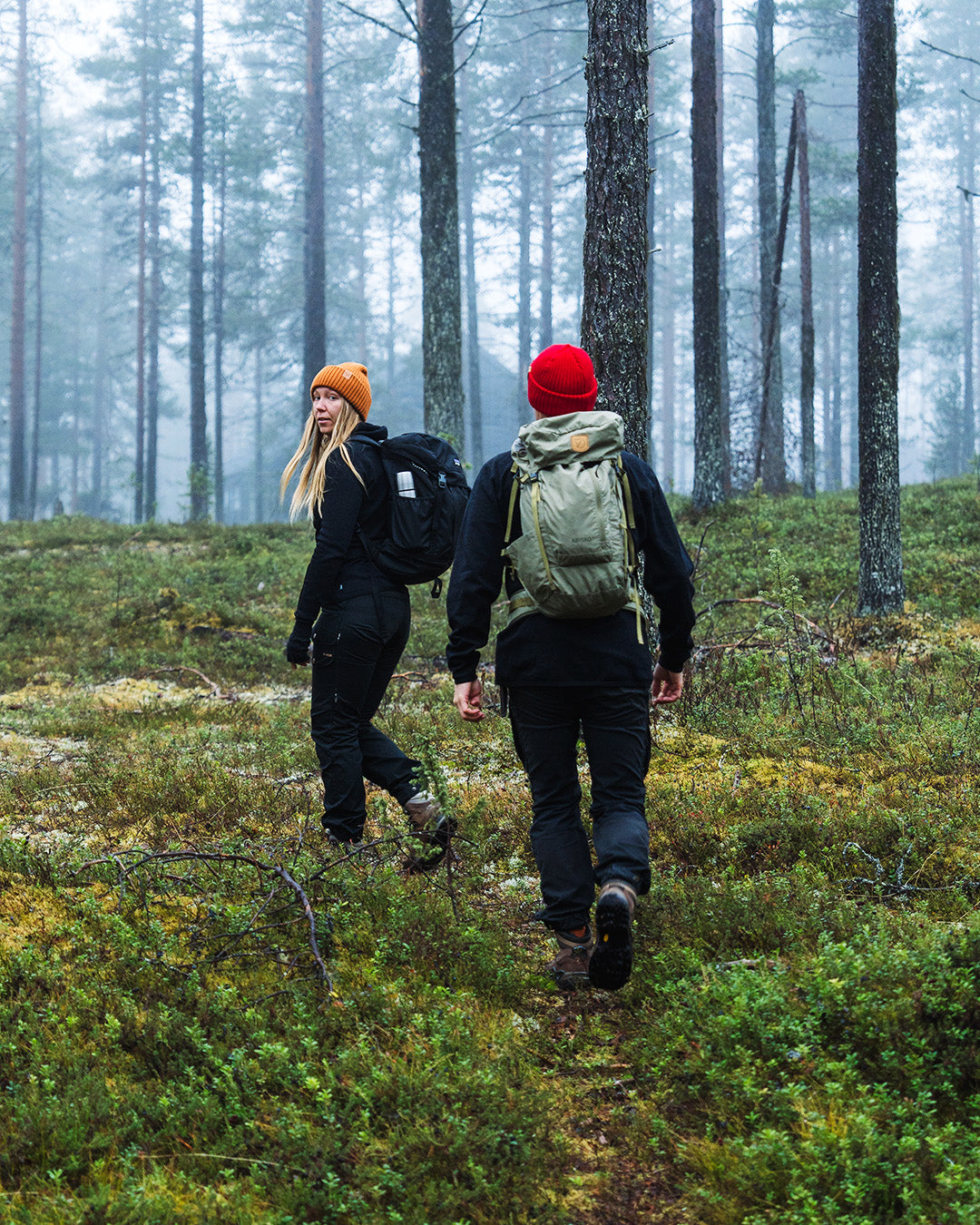
For us, freedom means following your own paths, exploring new places and enjoying nature. But freedom also comes with responsibility for how we act.
At Svala, that means considered material choices, a commitment to our own manufacturing and clothing designed to serve you for as long as possible.
We have made clothing in Kärsämäki since 1955. Over the decades, we have learned that a good product is not made by taking shortcuts. It comes from skill, careful work and the will to do things a little better every time.
We do not claim to be finished. But we know where we come from, how we work and where we want to go next.

Our own factory. Our own people.
Kärsämäki has been Svala's home for more than 70 years. And it still is.
We have around 30 employees, about half of whom work in production. Their hands make most of our Zero Layer, Base Layer and Mid Layer products.
All Svala of Finland products are designed in Finland and made in Finland or elsewhere in Europe. Beanies, socks and knitted jumpers are made at our Finnish partners' factories. Some of our Mid Layer products and our Shell Layer products are made in cooperation with other European manufacturers.
Knitting is also an important part of our Finnish production. More than 90% of the merino wool fabrics we use are knitted and finished in Finland.
Our own factory lets us monitor manufacturing quality, develop our working methods and use materials as precisely as possible.
But above all, it means people. Decades of experience, new talent and craftsmanship that we want to preserve and develop for future generations too.

Svala in numbers
1955 – the official founding year of clothing production in Kärsämäki
- Around 30 – employees
- 100% – of our products are designed in Finland
- Over 80% – are made in Finland
- Over 50% – are made in Kärsämäki
- Just under 20% – are made elsewhere in Europe
- Over 90% – of our merino wool fabrics are knitted and finished in Finland
- ISO 9001 and ISO 14001 – Finnsvala Oy's certified quality management and environmental management systems
The manufacturing shares are based on 2026 figures.

We know our products' journey.
A good garment is the work of many people. Some of the work is done in Kärsämäki, some at our partners' factories in Finland and elsewhere in Europe. The journey of the raw materials sometimes begins much further away.
We source yarns from Italy, Germany and Switzerland, for example. Our merino wool comes from countries including Australia, New Zealand, South Africa, Uruguay and Argentina. The mesh fabrics we use are made with our European partners.
80% of our first-tier suppliers are based in Finland and just under 20% in the Baltic states. More than 99% of our material purchases are made in Europe.
We choose our partners for their manufacturing expertise, quality and ability to work together. We require our suppliers to follow working principles in line with the ETI Base Code, which include a ban on child labour and forced labour and respect for workers' rights.
We assess our first-tier suppliers according to our own practices and make use of available certificates and other reports.
We know our own production well, but we do not yet have equally detailed information on every stage of the supply chain. In particular, we want to further improve the traceability of material origins and the assessment of our second-tier suppliers.

The right material for the right purpose
Svala's approach to materials is simple: we choose the fibre according to what the garment needs to do.
That is why we use both natural and technical fibres. They have different properties, strengths and environmental impacts.
Merino wool – nature's own expertise.
Merino wool is one of our most important materials. It absorbs moisture, helps even out changes in temperature and feels comfortable in a wide range of conditions.
According to written declarations from our yarn suppliers, the merino wool we use is mulesing-free. Mulesing is a surgical procedure performed on sheep with the aim of preventing certain parasitic infections.
We want to know the origin of the wool we use in more detail and are developing traceability together with our suppliers.
Technical fibres – when conditions demand them. Sometimes the best solution is not a natural fibre.
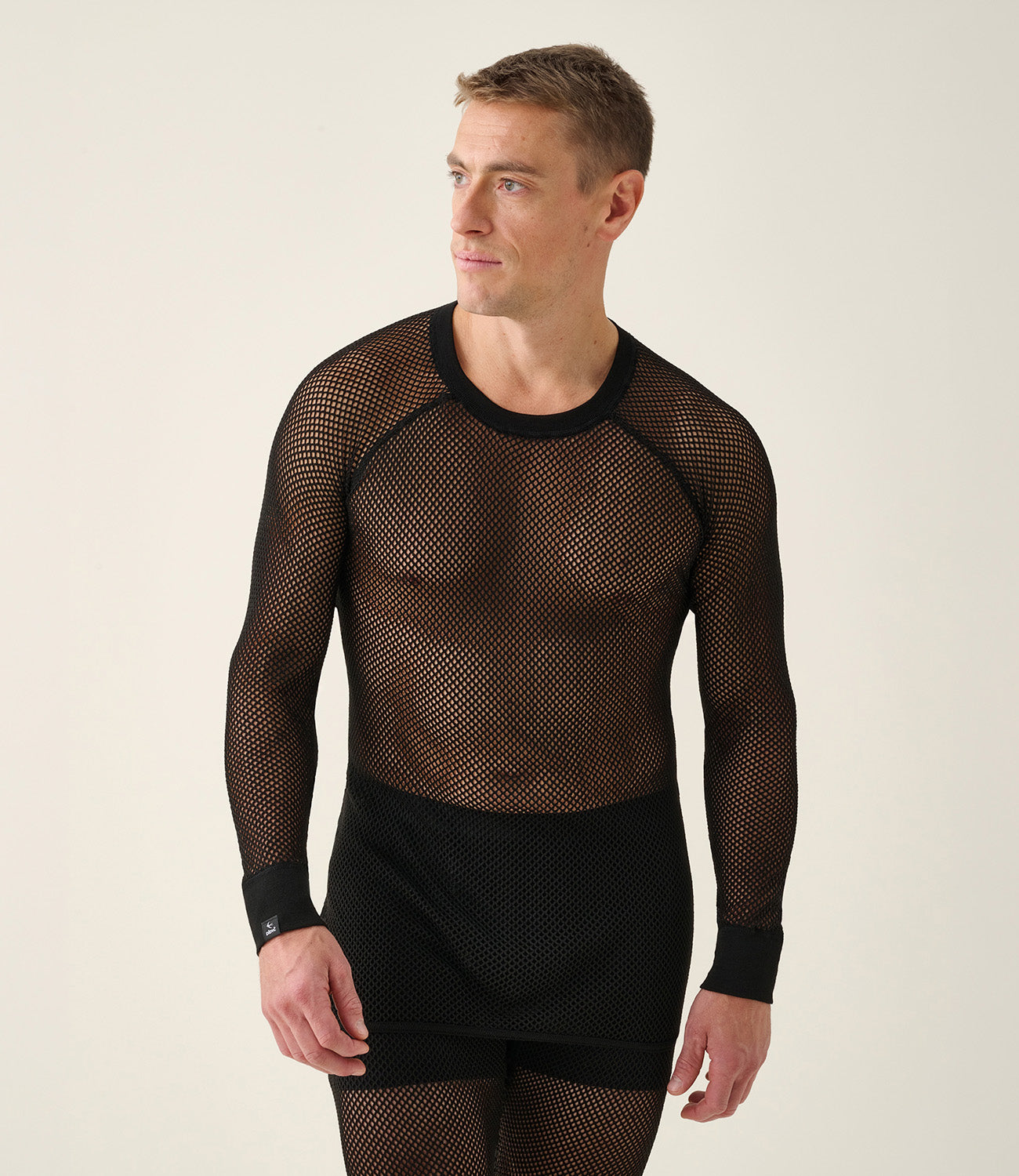
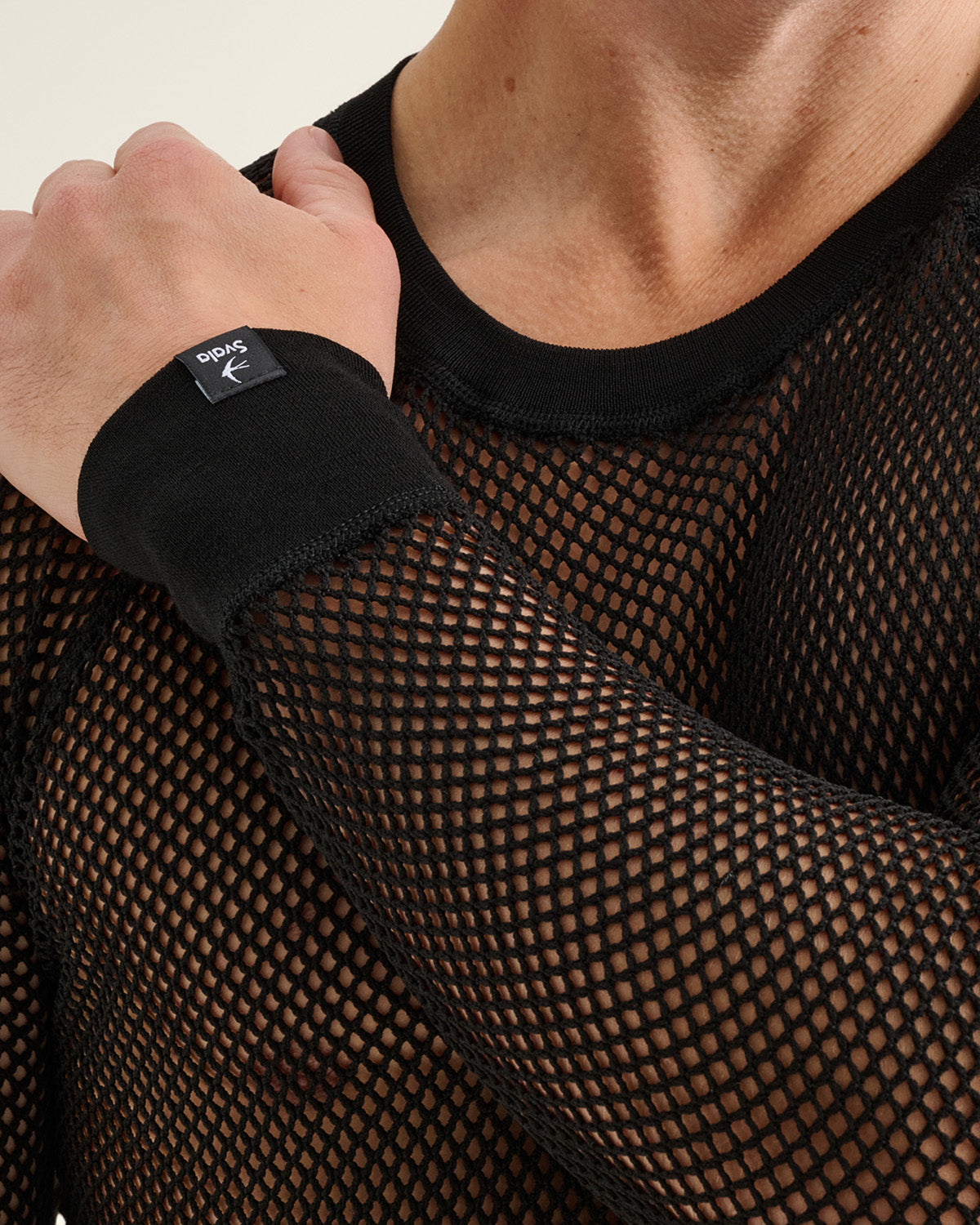
Our Original Airbase mesh garments are made from polypropylene, which absorbs very little moisture. Their open mesh structure helps move moisture away from your skin, and the garments dry quickly.
We also use polyester, polyamide and other technical fibres when their properties suit the purpose of the product.

Recycled materials.
Some of our products contain recycled fibres. According to our material suppliers:
- Polartec Alpha material contains 78% recycled polyester.
- Svala Wolpha material contains 58% recycled polyester.
- The material of the Wool Fleece mid-layer jacket and gilet contains 63% recycled wool.
We are also aware of the challenges of synthetic fibres. Their production can involve fossil raw materials, and microfibres can be released from them during use and washing.
That is why we recommend washing products only when needed and caring for them appropriately.
Fewer different fibres in one product.
We also make products from a single type of fibre, for example 100% merino wool, polypropylene or polyester.
A single-fibre material can be easier to identify, and it may be better suited to fibre recycling than many blended materials. In practice, however, recyclability also depends on the product's other components and the recycling methods available.

Material treatments
Some of our products' properties come from the structure of the material, others from treatments.
Our Original Airbase material uses a silver-based treatment intended to inhibit the growth of odour-causing bacteria in the material. The treatment, based on silver phosphate glass, is built into the core of the fibre during manufacture, so it does not wash out.
We require the materials and treatments we use to meet the applicable chemicals legislation. You will find product-specific information on treatments and any certifications in the product details.

Designed to be used. Year after year.
A good garment does not belong at the back of the wardrobe.
That is why we do not build our collections around fast-changing seasons. Many of our products have stayed in our range for years: Merino Extreme, Original Airbase and Polartec Power Stretch Pro, for example, have been with us since the 1990s. We develop our products based on user experience and new materials, but we do not change things just for the sake of it.
Care. Repair. Keep going.
Airing is often enough to freshen up a merino wool garment. The right washing and storage help keep the material in good condition.
Small holes and seam damage can often be repaired. For home repairs we offer FabPatch clothing patches, and for garment care, items such as clothes brushes and wash bags.
If a garment needs care, the first step does not usually need to be buying a new one.
Read our garment care guides.

Making the most of every metre of fabric
At our own factory, we can influence how materials are cut and what happens to the leftovers.
The material yield of our cutting layouts is typically 85–95%. We aim to use usable offcuts to make smaller products.
We give other offcuts to sewing and craft enthusiasts or send the material to suitable waste treatment, for example for energy recovery.
We also look for users for usable seconds. We sell products with cosmetic flaws in the outlet section of our factory shop in Kärsämäki.
Our goal is simple: to put as much of the material used in production as possible to good use.

Environmental impacts cannot be eliminated. They can be managed and reduced.
Making clothing consumes materials and energy. Transport, production and the use of products all have environmental impacts.
We do not claim that Svala of Finland products have no environmental impact.
Instead, we want to understand the impacts of our operations as well as possible and improve the things we can influence.
Energy and emissions.
Our factory in Kärsämäki is heated with ground source heat.
We have taken part in the Finland Chamber of Commerce climate programme and calculated the direct greenhouse gas emissions from our own operations (scope 1) and the emissions from producing the energy we purchase (scope 2). Read more about the criteria (in Finnish).
The calculation helps us identify where emissions arise and where action should be focused. However, it does not yet cover the emissions of our products' entire life cycle or supply chain.

Transport and packaging
We aim to avoid air freight for raw materials and finished products whenever other modes of transport are practically possible.
Our product packaging is made of cardboard. For online orders, we use mailing bags containing recycled plastic and cardboard.
We also reuse packaging materials from incoming deliveries when they are suitable.
Systematic improvement.
Finnsvala Oy's quality management system is certified to ISO 9001 and its environmental management system to ISO 14001.
The environmental management system helps us identify the environmental aspects of our operations, set targets and monitor progress.
The certification applies to our management system. It does not mean that each of our products is separately environmentally certified.

A small act for nature. Together.
In November, we hold our Green Weekend campaign, during which we donate five euros to the Finnish Natural Heritage Foundation (Luonnonperintösäätiö) for every order placed.
The Finnish Natural Heritage Foundation acquires and protects valuable natural sites in Finland.
This is one way to take part in supporting nature conservation. It does not cancel out the environmental impacts of manufacturing or transporting our products.

Responsibility indicators
We track our progress with the following indicators.
Current status 2026:
- 100%* – share of mulesing-free merino wool in our wool purchases
- Less than 1% – share of recycled materials in our material purchases
- 20% – share of single-fibre materials in our material purchases
- 15% – share of cutting waste in material
- 10 – products repaired per year
* The mulesing-free status of our merino wool is based on written declarations from our yarn suppliers, not on independent farm-level certification of every wool supply chain.
We update the figures and calculation methods once a year.
Last updated: October 2026.

The next step is always ahead
We are proud of what we have built in Kärsämäki over more than 70 years. But a long history does not mean that everything is finished.
We are currently developing material traceability and our supplier assessments. We also monitor production waste and the share of recycled materials, and on this page we also tell you about the areas where we have not yet reached the result we want.
For us, responsibility does not mean perfection or big words.
It means knowing our work, taking responsibility for our choices and wanting to do things better tomorrow than today.
Freedom to explore. Responsibility to do it right.
Svala For freebirds.