



Reliable clothing for snowmobilers in every layer
What you wear under your snowmobile suit makes the difference
The snowmobiling season starts once there is enough snow and, in the north, runs well into the spring crust-snow days. Snowmobiling varies, but the rhythm is often the same: sometimes you are moving and warming up, sometimes you sit still for a long time in the wind chill. A cross rider may stand on the running boards for the whole trail and take the bumps with their legs, while a deep-snow rider turns the snowmobile and, when needed, digs it out of the snow with sweat on their brow. An ice angler rides out onto the open lake, drills the holes and then sits still for hours.
On a long trip along the snowmobile trails, you can easily cover hundreds of kilometres in a single day of riding, while someone heading for the fells pulls a sledge from hut to hut at an easy pace. You do not usually take your snowmobile suit off during the day, so sweat and moisture stay trapped inside it. That is why the layers you wear underneath decide how long you can fully enjoy your day of riding.
On this page, we have put together a snowmobiler’s reliable garment for each layer and explain which moment of the riding day each one suits best.
One reliable garment for every layer
The Zero Layer keeps your skin dry when riding or digging gets hard, the Base Layer evens out your temperature over hours of sitting, and the Mid Layer insulates when you ride in hard frost and when you are stationary. The Shell Layer – your snowmobile suit – keeps the wind chill and snow out.

Four layers, one complete set
For snowmobiling, you choose your layers to suit your snowmobile suit and the way you ride. Under a thin snowmobile suit, the layers do all the work: they keep your skin dry when riding gets sweaty and insulate when you stop. An insulated one-piece or two-piece suit already has the insulation built in, so two layers underneath are often enough. Together, the layers make up the Svala AIR System™ layering system, in which every garment has its own place and the air between the layers works as insulation.

Zero Layer – Next-to-skin performance
You sweat more often on a snowmobile than you might think. On a cross snowmobile you stand and bounce on the running boards, and in deep snow you turn and rock the snowmobile or dig it out. Even on a calmer ride, you easily start sweating when you put on your riding gear in a warm cabin, load the sledge or drill ice-fishing holes through thick ice.
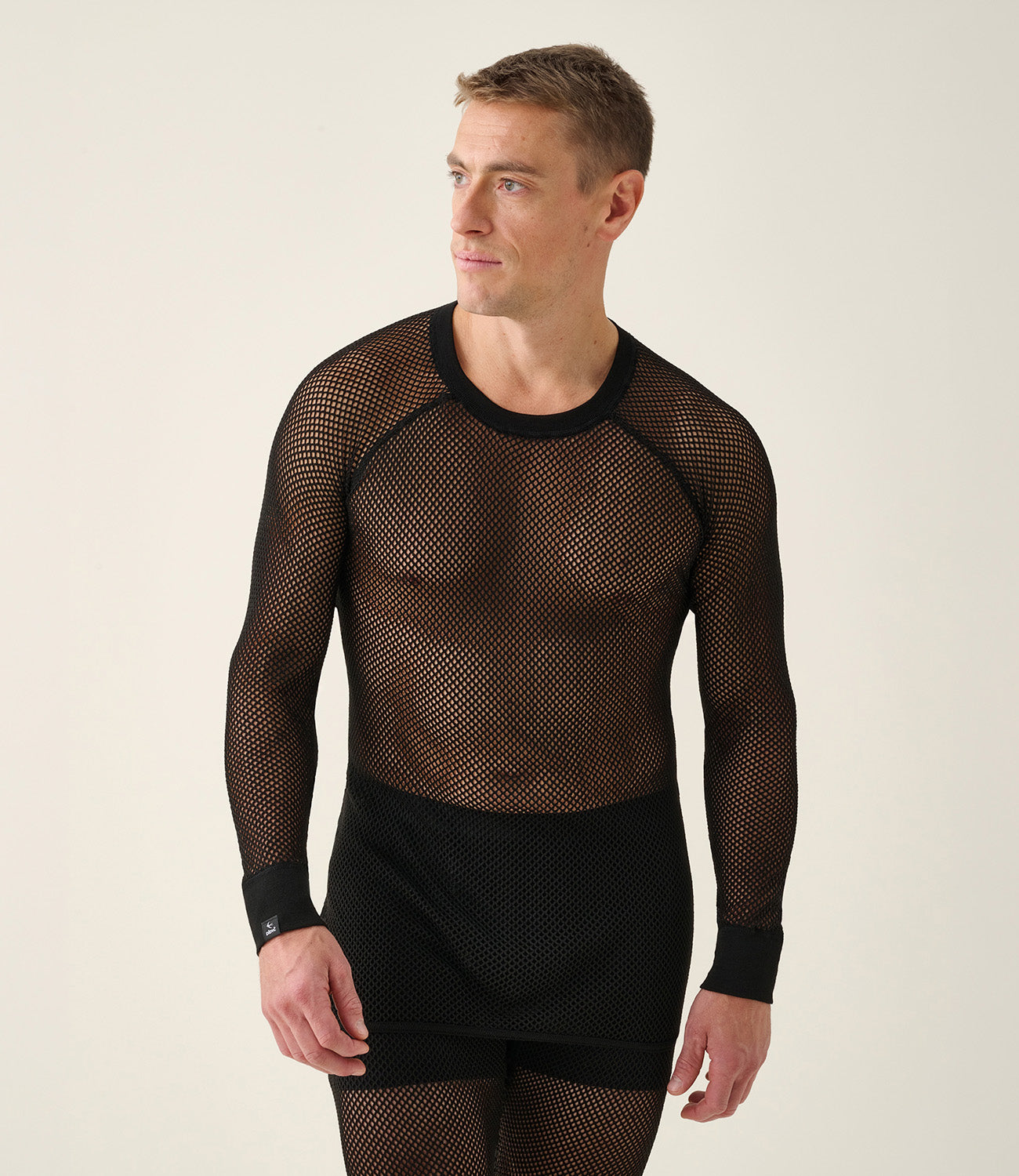
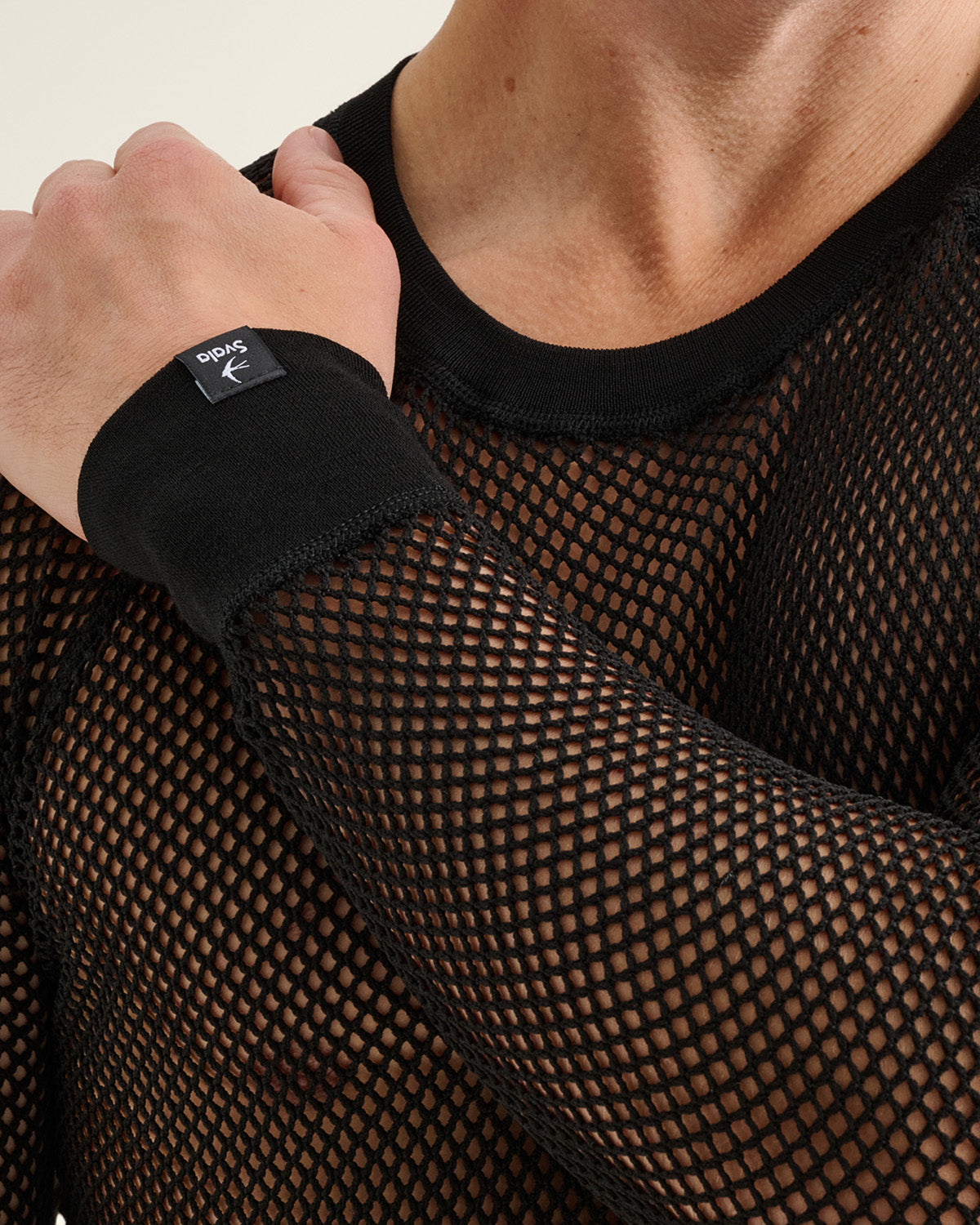
A damp shirt next to your skin chills you as soon as you sit back down on the seat and the speed adds wind chill to the frost. That is why you wear the Airbase mesh shirt and mesh bottoms next to your skin. Airbase is 100% polypropylene, which does not absorb moisture but moves it from your skin to the next layer. When you set off again, your skin is dry and a damp shirt will not draw away your warmth for the rest of the ride.
The loops of the 120 g/m² 3D mesh knit trap a thin layer of air against your skin: when you are working hard, excess heat can escape, and while you ride, the layer of air insulates and keeps you warm. The thin, stretchy mesh moves with you when you stand up and lean the snowmobile into a turn. The silver-ion treatment keeps the layers fresh, so you can ride a multi-day snowmobile trip in the same garments with nothing more than airing.

Men's Original Airbase 120 mesh set

Women's Original Airbase 120 mesh set
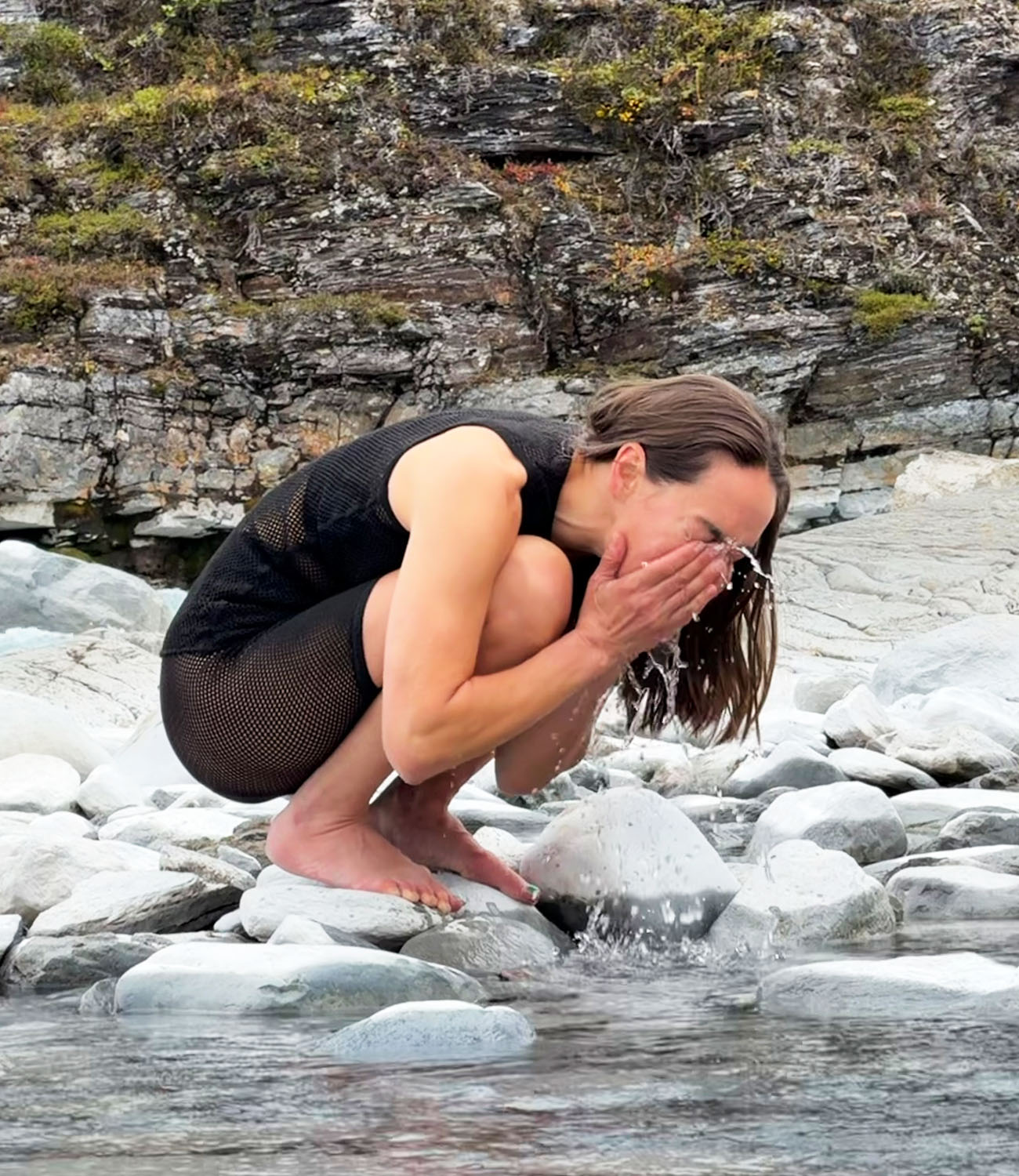
“When I’m out snowmobiling, I always wear Svala underneath. Once you’ve tried it, you won’t want to wear anything else.”

Base Layer – Temperature regulation
On a long transfer along a snowmobile trail or across an open lake, your body produces hardly any heat, and the speed adds wind chill to the frost. The cold does not hit you all at once but creeps in gradually, often over an hour or two: first into your thighs and knees from the sides of the windscreen, then into your chest and neck. A passenger usually gets cold faster than the driver, as they do hardly anything while riding.
Over Airbase you wear the Merino Extreme base layer top and bottoms. In the double-layer construction, the polypropylene on the inside moves moisture onwards and the merino wool on the outside insulates. Merino wool absorbs moisture into the fibre and releases it gradually, so it evens out moisture and temperature close to your skin and does not feel wet straight away. If you sweat heavily, the merino can also get a little damp, which is why you wear Airbase underneath.
On a snowmobile, the bottoms are just as important as the top, because your thighs are the first to take the wind chill. The slightly longer back hem of the top keeps your back covered when you lean forward or ride as a passenger. Merino Extreme is made for temperatures from −30 °C to +15 °C, so it goes under your snowmobile suit all season, from the early winter frosts to the spring crust-snow days. Merino wool is naturally odour-resistant, so the set freshens up with airing between riding days.

Men's Merino Extreme 200 base layer set

Women's Merino Extreme 200 base layer set

Mid Layer – Thermal insulation
Time flies when you are ice fishing. Once you have ridden out onto the lake, drilled your holes and settled in beside them, you may sit on the ice for hours. On the fells, you often stop to make coffee or just to watch the northern lights flare up across the sky. In hard frost, two thin layers can feel like too little, but in deep snow or on an active trail ride a thicker layer can be too much.
That is when you wear a mid-layer made of wool terry over Airbase and Merino Extreme. Nordic Terry Wool has a smooth outer surface and yarn loops on the inside. The loops trap air and move moisture away from your skin, so the material insulates when you are stationary and stays breathable. In hard frost, you put this layer on under a thin snowmobile suit before you set off. With an insulated one-piece suit, it often travels in the sledge and goes on only when you arrive.
Wind chill easily gets in between your helmet and collar, and the cold rising from the ice comes through the seat, so it is worth wearing an insulating layer on both your upper and lower body.

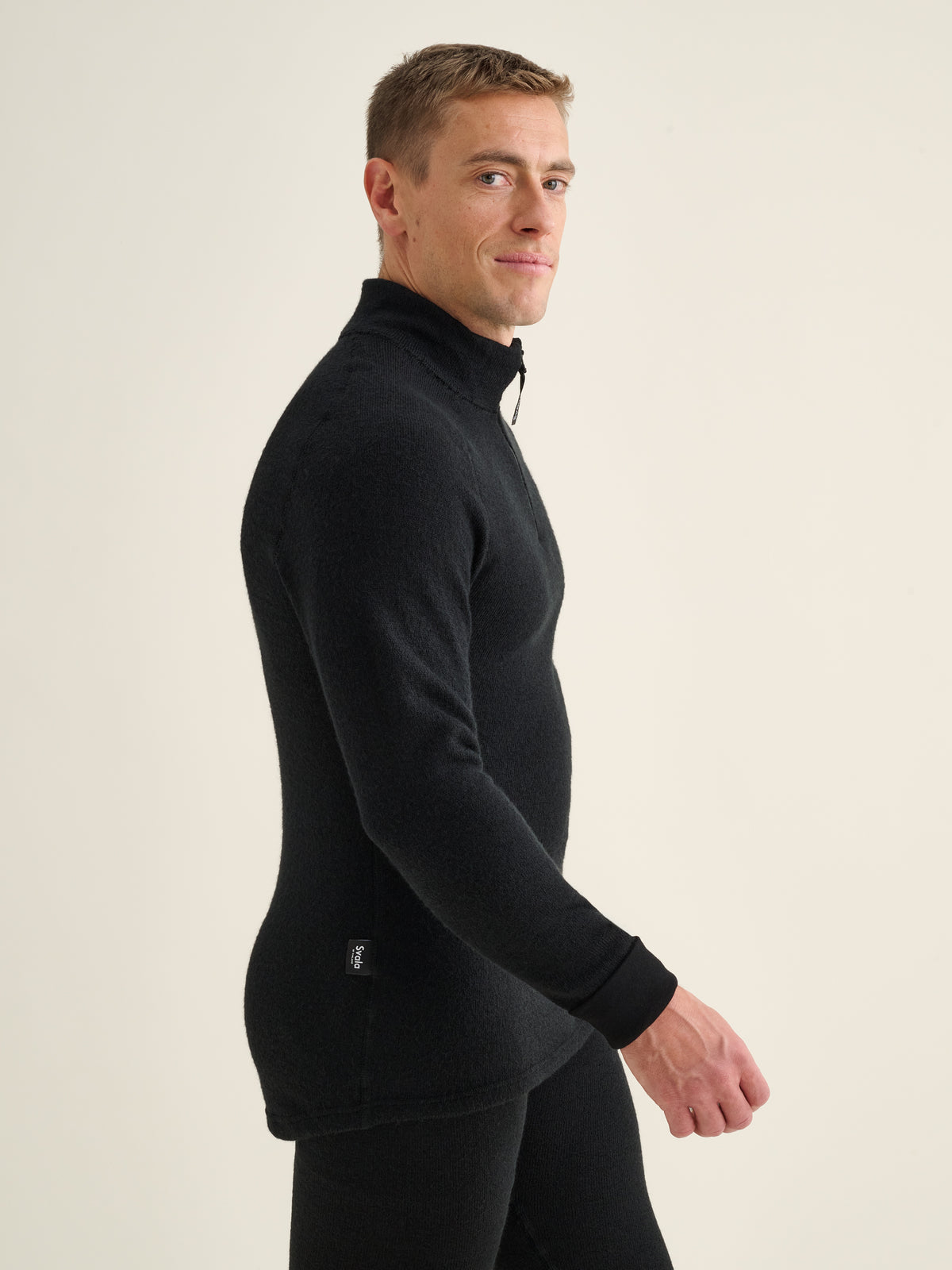
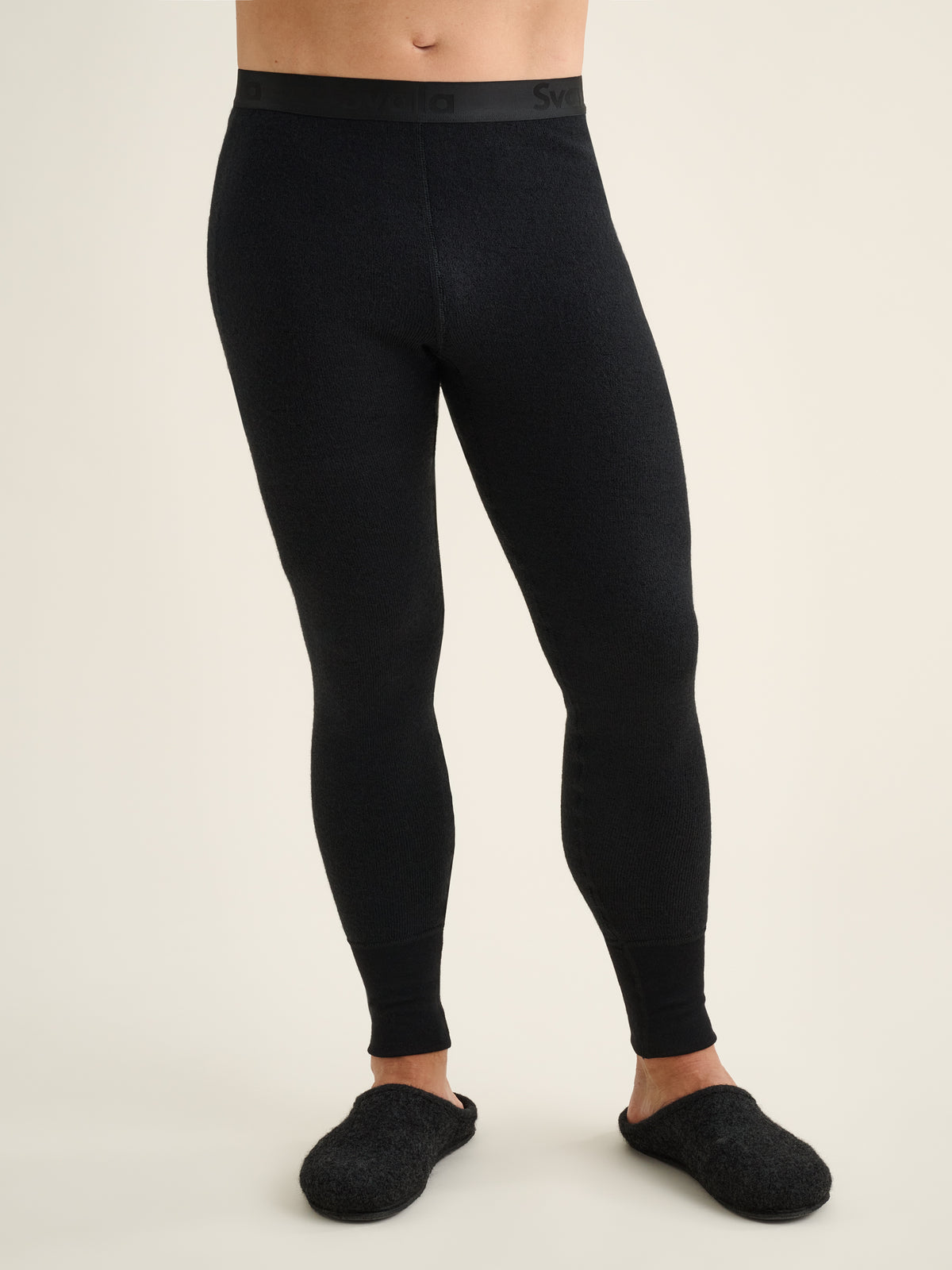
Men's Nordic Terry Wool 400 zip-neck mid-layer set

Women's Nordic Terry Wool 400 mid-layer jacket

Shell Layer – Weather protection
On a snowmobile, your snowmobile suit is your outermost layer. It has to keep out the wind chill, the frost and the swirling snow for hours on end, but it also has to breathe, so that the moisture from hard work does not stay trapped inside. In deep snow, snow comes at you from every direction, and on the ice the wind blows unhindered across your whole back.
Snowmobilers have many opinions about suits, and the choice depends on how you ride. For active trail and off-trail riding, many people wear a thin, breathable suit that gives them room to move. On the ice, for ice fishing and on the fells, people often ride in a thicker snowmobile suit or an insulated one-piece or two-piece suit. Whatever you choose, make sure the suit is roomy enough for all your layers to fit underneath with enough insulating air between them.
The thicker and more airtight your suit, the more important it is that your skin stays dry, as an insulated one-piece suit does not let sweat out as easily as a thin suit. Open the zips when you dig out the snowmobile or drill holes, and close them before you set off again.
Svala’s layers work under both a thin snowmobile suit and an insulated one-piece suit, so you can choose your suit to match the way you ride. Svala’s own shell layer, Ventile, is the shell for the moments when you do not need your snowmobile suit. At the end of a day of riding, it feels good to take off the suit and put on a breathable shell, and the same shell goes with you everywhere else too.

Men's Ventile 200 jacket

Women's Ventile 200 jacket

You do not need everything at once – start here
You do not need to change your snowmobile suit, and you do not need to buy everything at once. If you are starting from scratch, start with the layer next to your skin, as it decides whether you ride the rest of the way warm or cold. An Airbase set next to your skin with a Merino Extreme set over it makes a pair that is enough under an insulated one-piece suit on most riding days and works as the foundation under a thin snowmobile suit.
If you already have one of the layers sorted, buy only what is missing:
- Do you already have a merino wool base layer? Complement it with Airbase: wear the mesh layer next to your skin under the merino, so sweat moves away from your skin when you dig out the snowmobile or load the sledge, and the merino insulates better for the rest of the ride.
- Are your Airbase and merino layers already sorted? For hard frost, long transfers and ice fishing, add the Nordic Terry Wool mid-layer set to your kit.
- Do you already have a snowmobile suit or an insulated one-piece suit? There is no need to replace it. Make sure your other layers fit loosely underneath. The air space between the layers is part of the warmth.
Remember your hands and feet too, as they get cold easily on a snowmobile: your thumb on the throttle is in the wind chill the whole time, and your feet stay still in the footwell for hours. Snowmobile mitts or gloves, a helmet liner and merino wool socks belong to the same kit. The same layers do not stay in the wardrobe when the snowmobile season ends: they also work on cross-country ski trails, on snowshoe trips and for other winter outdoor activities.

Four layers, one effective system
Layer: Zero Layer - next-to-skin performance