



Reliable clothing for every layer for mountain bikers
From roots to rocks and back to a standstill
On a mountain bike, your heart rate never stays steady for a moment. A short, steep root climb brings the sweat out, then comes a rocky descent and then a stop while the group waits at a junction or someone fixes a puncture. Some ride with a hydration pack, others with a hip pack or a bottle on the bike, but either way your back is sweating after the first climb. An evening loop in your local woods lasts an hour or two, and on the fells you can easily ride all day, but in both cases a wet shirt starts to chill you as soon as the pace drops.
On this page, we have put together a complete set that works: one go-to garment for each layer, and the moments of the ride where each one does its best work, from the first trails of spring to the muddy rides of October. You do not need to compare dozens of options or guess whether the garments work together. Here is a set in which every layer is designed to work with the next.
We have built separate sets for other kinds of cycling: the cyclist's go-to garments for your regular rides, the cycle tourer's go-to garments for multi-day trips, the winter cyclist's go-to garments for frosty mornings and slush, and the cycle commuter's go-to garments for a ride with a working day at the end of it.
One go-to garment for each layer
The Zero Layer wicks sweat away from your skin on climbs, the Base Layer evens out warmth and moisture as climbs, descents and stops alternate, the Mid Layer insulates on long off-road trips and during breaks on the fells, and the Shell Layer shields you from rain, spray and the wind on the fells.

Four layers, one set that works
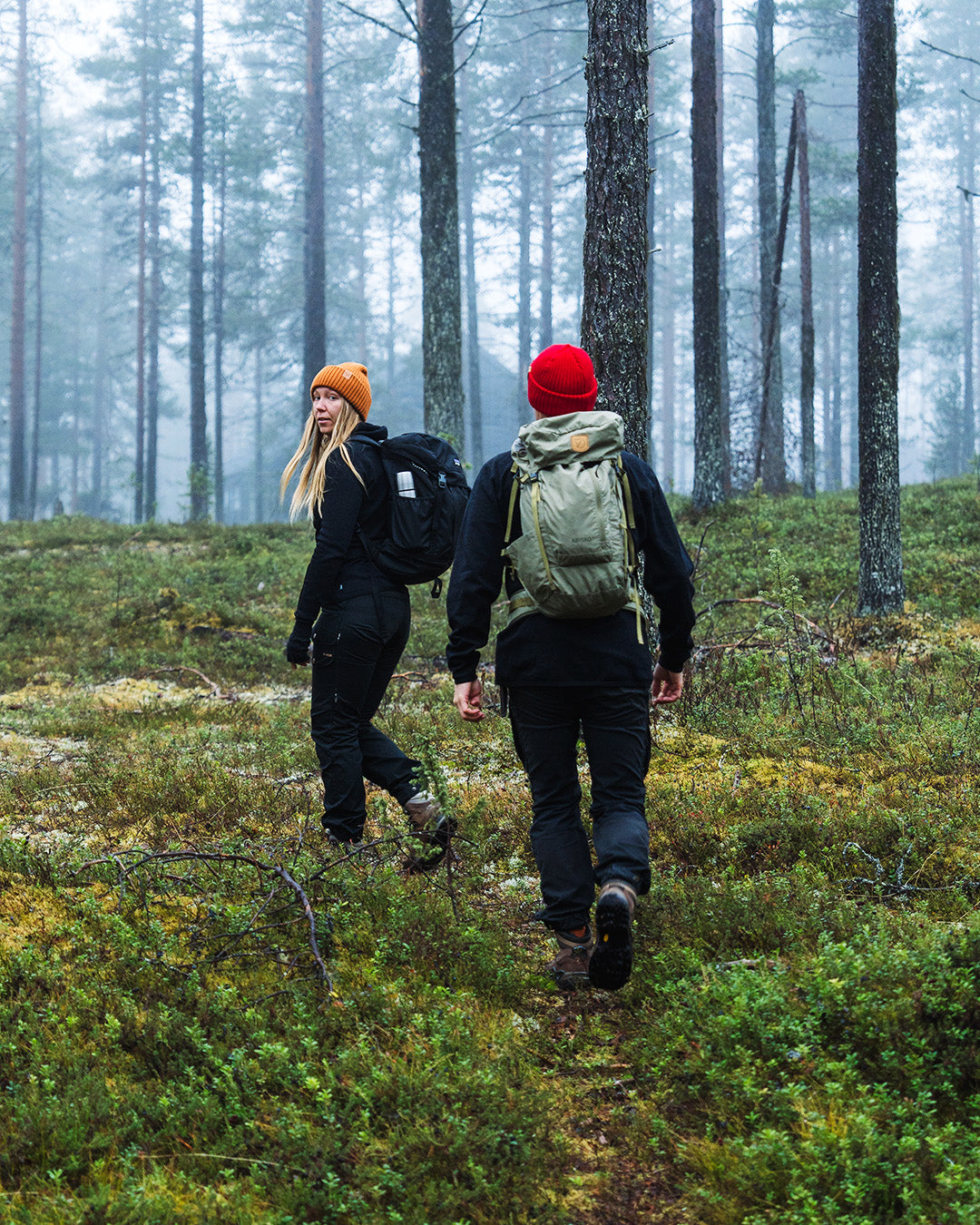
Off-road, the same outfit goes from the car to the trail, from root climbs to rocky descents and back, and you rarely change clothes mid-ride. On a summer evening trail ride you need less, but on a muddy October ride or a full day on the fells every layer does its job. Together they form the Svala AIR System™ layering system, in which every garment has its place. The layers go under a loose cycling jersey or jacket, and the air trapped between them insulates and keeps you warm without anything feeling tight when you stand on the pedals.

Zero Layer – Next-to-skin performance
There are several ways to carry your kit. One rider has a hydration pack, another a hip pack with repair tools, and a third a bottle on the frame. Under a pack, your back gets wet first, because the pack presses your shirt against your skin and sweat cannot evaporate even through a breathable back panel. With a hip pack your back is free, but you still sweat. When you stop to wait for a friend or drop into a descent, the moisture starts to chill you.
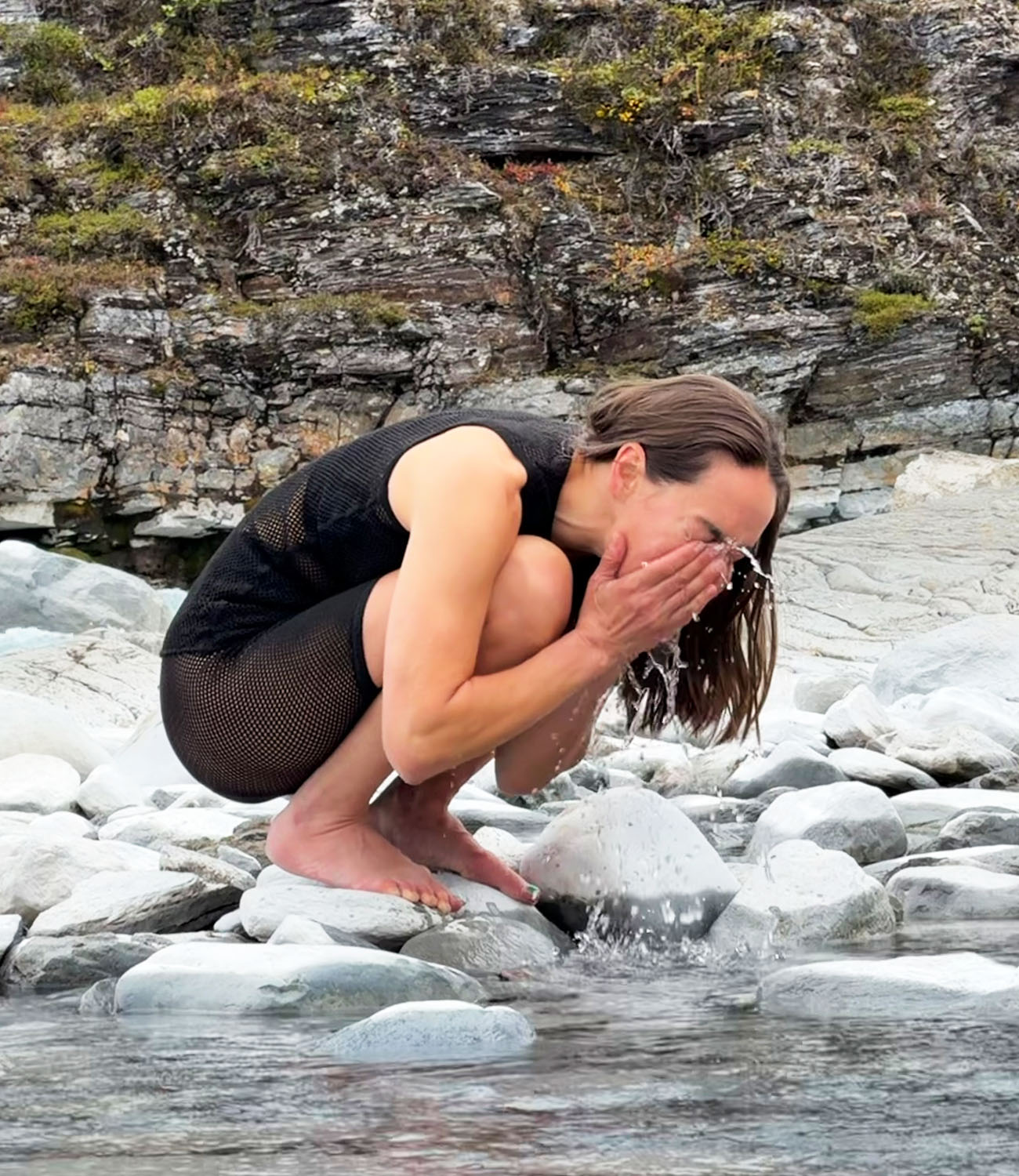
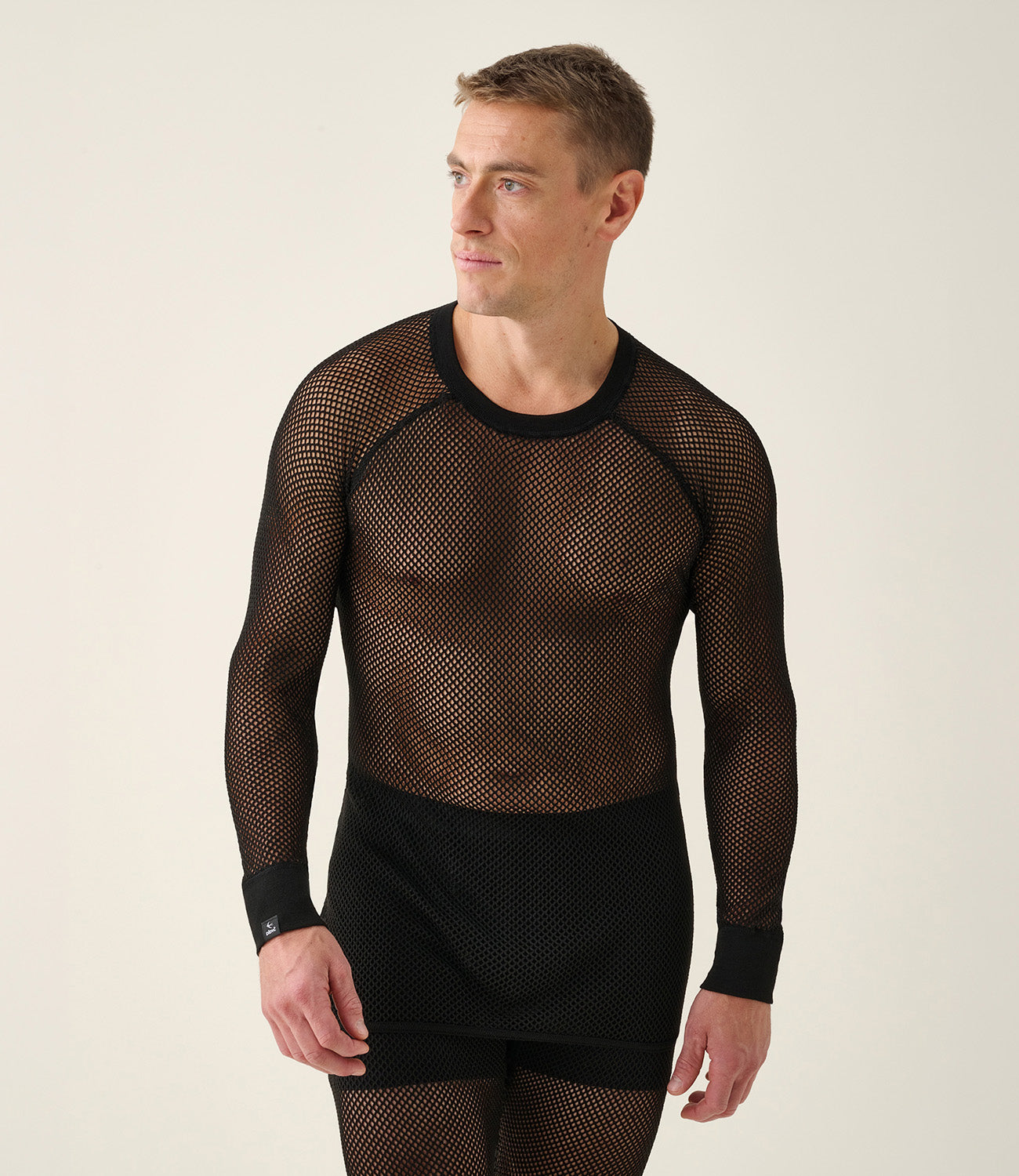
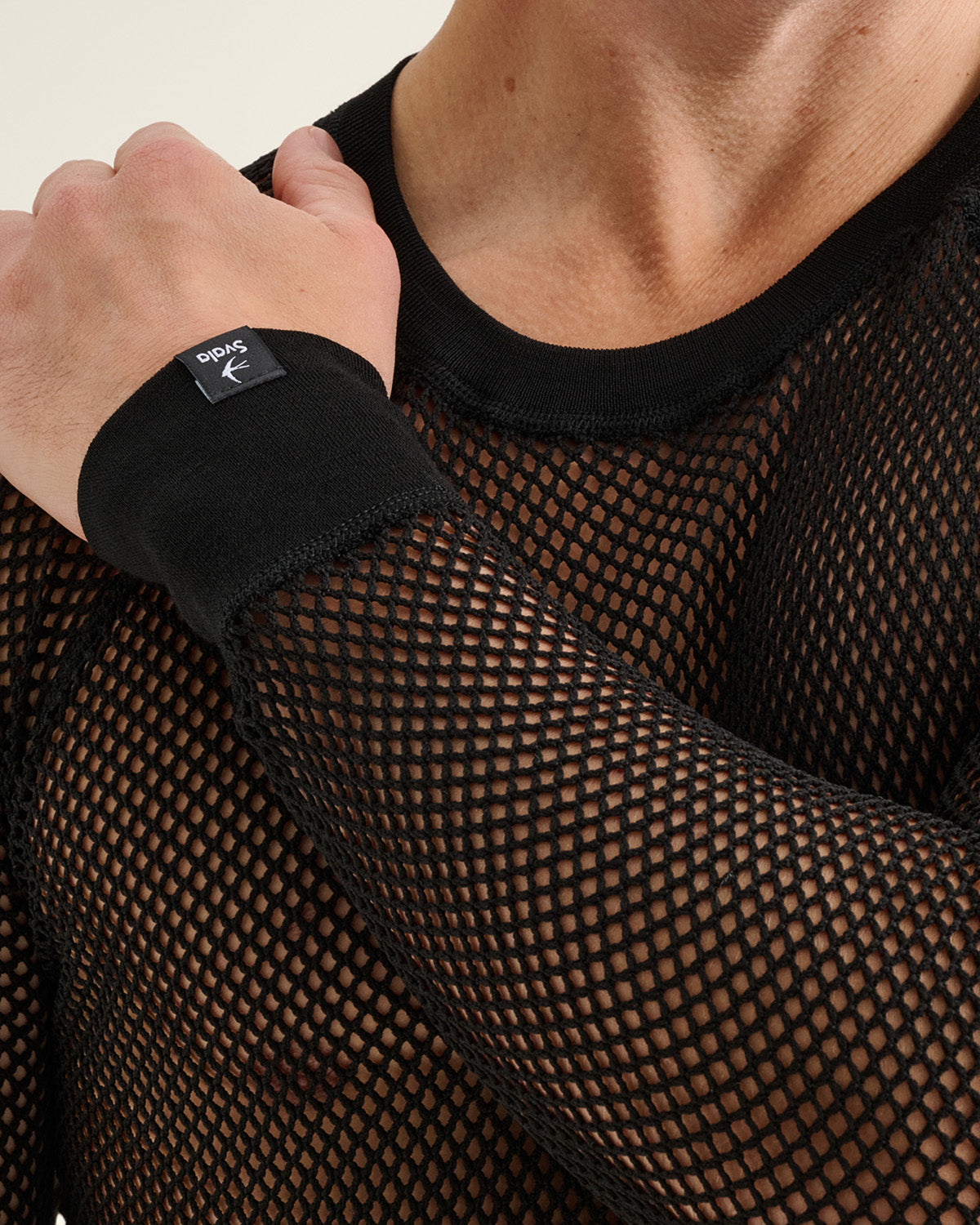
An Airbase mesh shirt and mesh bottoms worn next to your skin keep it dry. Airbase is 100% polypropylene, which absorbs no moisture at all but moves sweat away from your skin to the next layer. That way you do not get cold in the wind on a descent with a wet shirt stuck to your back.
The loops of the 120 g/m² 3D mesh knit trap a thin layer of air against your skin: on climbs it cools you, and when you stop it insulates and keeps you warm. On a summer trail ride, a mesh T-shirt can be the only layer under your jersey, and in cooler weather a long-sleeved mesh shirt. Silver-ion treatment in the core of the fibre keeps the shirt fresh, so just air it and it is ready for the next ride.

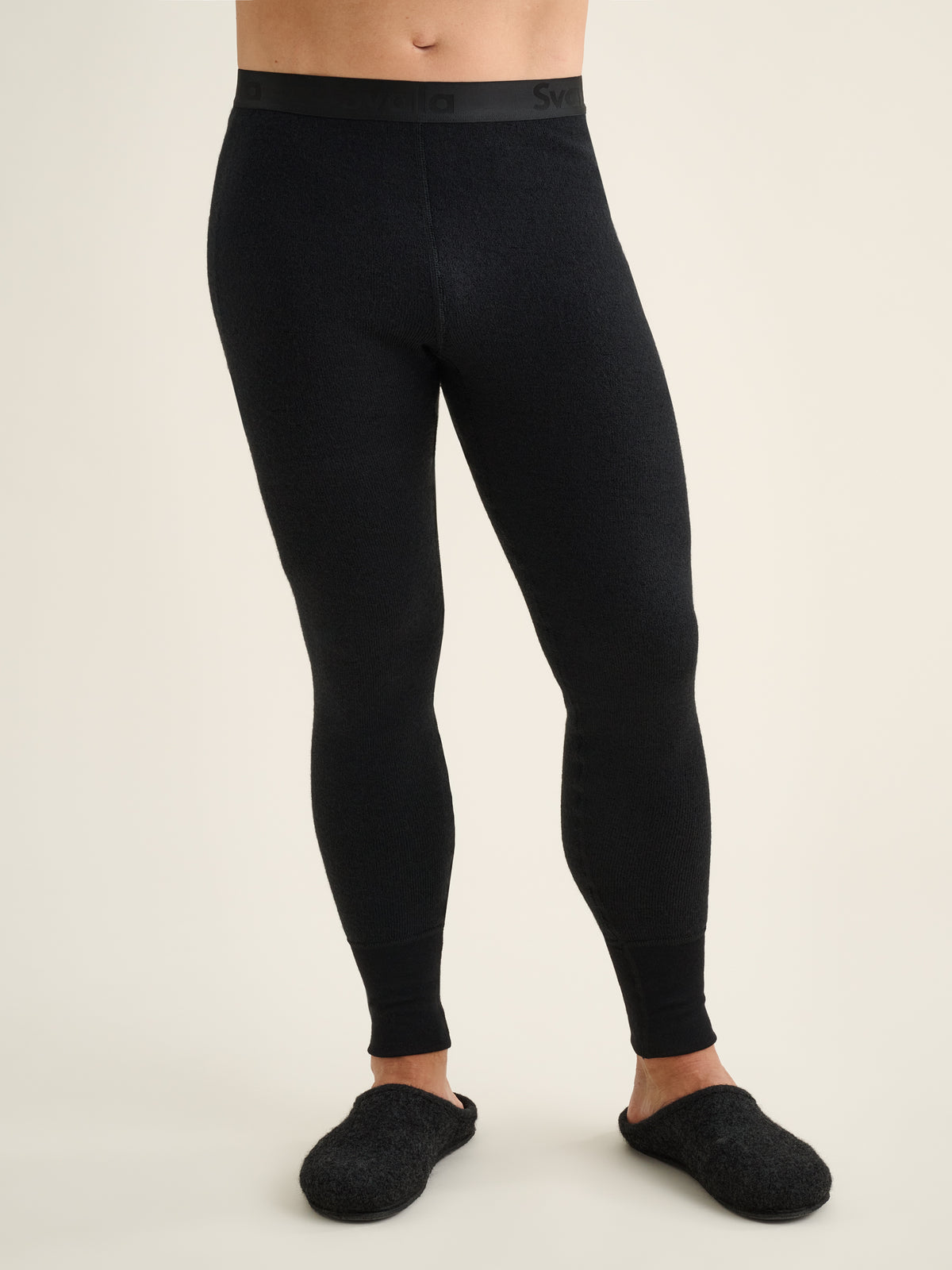
Men's Original Airbase 120 mesh set

Women's Original Airbase 120 mesh set
“Repair kit in the hip pack, bottle on the frame, back free. The mesh shirt still always goes on first. On a summer evening you sweat on the root climb, and ten minutes later you are standing on the pedals on a descent and the wind goes right through.”


Base Layer – Temperature regulation
On a trail ride, your temperature changes from one minute to the next. A rooty climb maxes out your heart rate, on a short but technical descent you stand on the pedals and your body cools, and at a junction you stop to check the route or wait for the group. You cannot adjust your layers on every hill, so what you are wearing has to work in all of these moments.
In spring and autumn, a Merino Extreme top goes over Airbase. In its double-layer construction, the polypropylene on the inside moves moisture onwards and the merino wool on the outside insulates. Merino wool absorbs moisture into the fibre and releases it gradually, so it evens out moisture and temperature close to your skin.
Together, Airbase and Merino Extreme are the best layering pair for mountain bikers: the mesh layer moves moisture away from your skin and Merino Extreme insulates. Merino wool is naturally odour-resistant, so the top freshens up when you air it between rides.

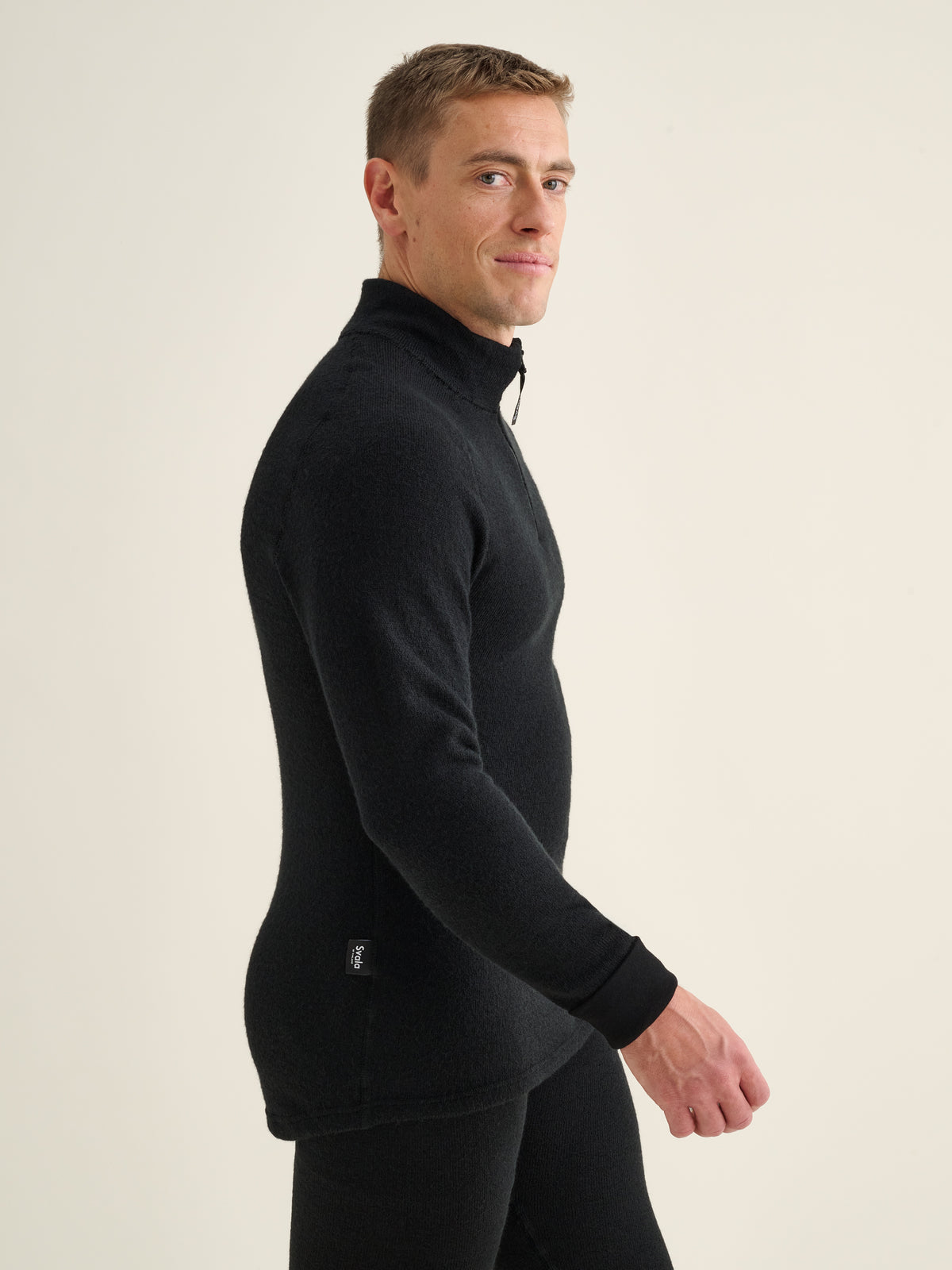
Men's Merino Extreme 200 base layer set

Women's Merino Extreme 200 base layer set

Mid Layer – Thermal insulation
On a long off-road trip and on the fells, the cold moments are real. It is often windy on the fell tops, on a long descent the wind blows through your sweaty shirt, and at a food stop by a lean-to shelter your body cools quickly. On a September ride through the autumn colours, the morning can be close to zero even if you are riding in a T-shirt by the afternoon.
The Polartec Alpha™ hoodie goes over the merino. It is light, insulates even when slightly damp and breathes so well that you can keep it on when climbing, so you do not need to take it off at the foot of every hill. The hoodie packs down small, so it travels in your pack, ready for the fell tops and breaks.

Men's Polartec Alpha 90 hoodie

Women's Polartec Alpha 90 hoodie

Shell Layer – Weather protection
The outermost layer completes your layering: a lightweight cycling jacket or a windproof shell. The Shell Layer's job is to cut the wind and keep rain and spray out, so that the warm air trapped in the layers beneath cannot escape. On a forest trail the wind is rarely as strong as on an open road, but a wet, muddy trail easily soaks your layers with spray. Protection alone is not enough, though: the shell must also breathe so that sweat does not soak your layers from the inside on climbs.
Mountain bikers have many opinions about shells. Some ride in a membrane jacket, others rely on a wind jacket or gilet and keep a rain jacket in their pack, and in summer many ride with no shell at all. A roomy shell fits over your other layers, and the air between them insulates and keeps you warm.
Svala's own Shell Layer, the Ventile 200, is a membrane-free jacket made from very tightly woven long-staple cotton. When it gets wet, the fibres swell and the weave tightens, so the fabric repels light rain and showers and breathes without a membrane. It protects you from the wind on the fells and is made to last year after year. For constant heavy rain, a technical waterproof shell is more practical.

Men's Ventile 200 jacket

Women's Ventile 200 jacket

You do not need everything at once – start here
The system works best when you adjust your layers to the ride and the weather: fewer in summer, more on muddy autumn rides and on the fells. You do not need to buy everything at once. If you are starting from scratch, begin with the next-to-skin layer, because it decides whether your back is wet under your pack. Airbase next to your skin with Merino Extreme on top forms a pairing that takes you from the first trails of spring to the last rides of autumn.
If you already have a suitable layer, buy only what is missing:
- Do you already have a merino wool base layer? Complement it with Airbase: wear the mesh layer next to your skin under the merino, and you will stay dry on climbs and not get cold at speed on descents.
- Are your next-to-skin and warming layers already in place? For cooler weather and long rides, add a light Polartec Alpha™ hoodie that you can keep on even at a hard pace.
- Do you already have a cycling jacket or shell? There is no need to replace it. Make sure it breathes and that your other layers fit underneath.
This way, you can build a system that works at your own pace. Although we put these layers together for mountain biking, they will not stay in the wardrobe: the same garments also work for other outdoor activities and change seasons with you.

Four layers, one effective system
Layer: Zero Layer – next-to-skin performance