



Reliable clothing for cycle touring in every layer
On a cycling trip, you wear the same clothes day after day
A cycling trip can be a weekend on the Archipelago Trail or a couple of weeks on the gravel roads of Lapland. Your kit travels in panniers or bikepacking bags, and you spend the nights in a tent, at a lean-to shelter or in a campsite cabin. You often pedal for many hours a day, sometimes into a headwind and sometimes in the heat, and sweat builds up in your clothes without you noticing. In the evening at camp, the air easily drops to around ten degrees even in summer, and after a day of rain you pull on yesterday's wet cycling clothes in the morning. Your bags usually hold one riding outfit and one dry set for camp, so your layers decide how comfortable the trip still is on day three.
On this page, we have chosen the cycle tourer's go-to garments, one for each layer, and we explain the moments of the touring day where each one does its best work. You will find separate sets for other kinds of cycling: the cyclist's go-to garments for all kinds of riding, the mountain biker's go-to garments for the trail, the winter cyclist's go-to garments for frost and wind chill, and the cycle commuter's go-to garments for a ride with a working day at the end of it.
One go-to garment for each layer
You do not need to compare dozens of options or guess whether the garments work together. Here is a set in which every layer is designed to work with the next. The Zero Layer moves sweat away from your skin in the saddle, the Base Layer evens out warmth and moisture during breaks, at camp and on chilly mornings, the Mid Layer insulates against the cool of the evening at camp and the Shell Layer shields you from rain and headwinds. You can focus on the route, the scenery and the next place to camp.

Four layers, one set that works
On a tour, the same layers travel with you in the same bags for the whole trip, and they have to work on a long riding day, at a food stop and on a cooling evening at camp. On a hot July day you need less, but on a rainy September day and a cold night you need every layer. Together they form the Svala AIR System™ layering system, in which every garment has its place and the air trapped between the layers insulates and keeps you comfortable.

Zero Layer – Next-to-skin performance
On a touring day you often pedal for four to eight hours, partly on tarmac and partly on gravel, sometimes uphill and into a headwind. The sweat does not usually pour off you, but it builds up on your back and under your arms hour by hour. When you stop for food, the wet shirt quickly starts to chill you.
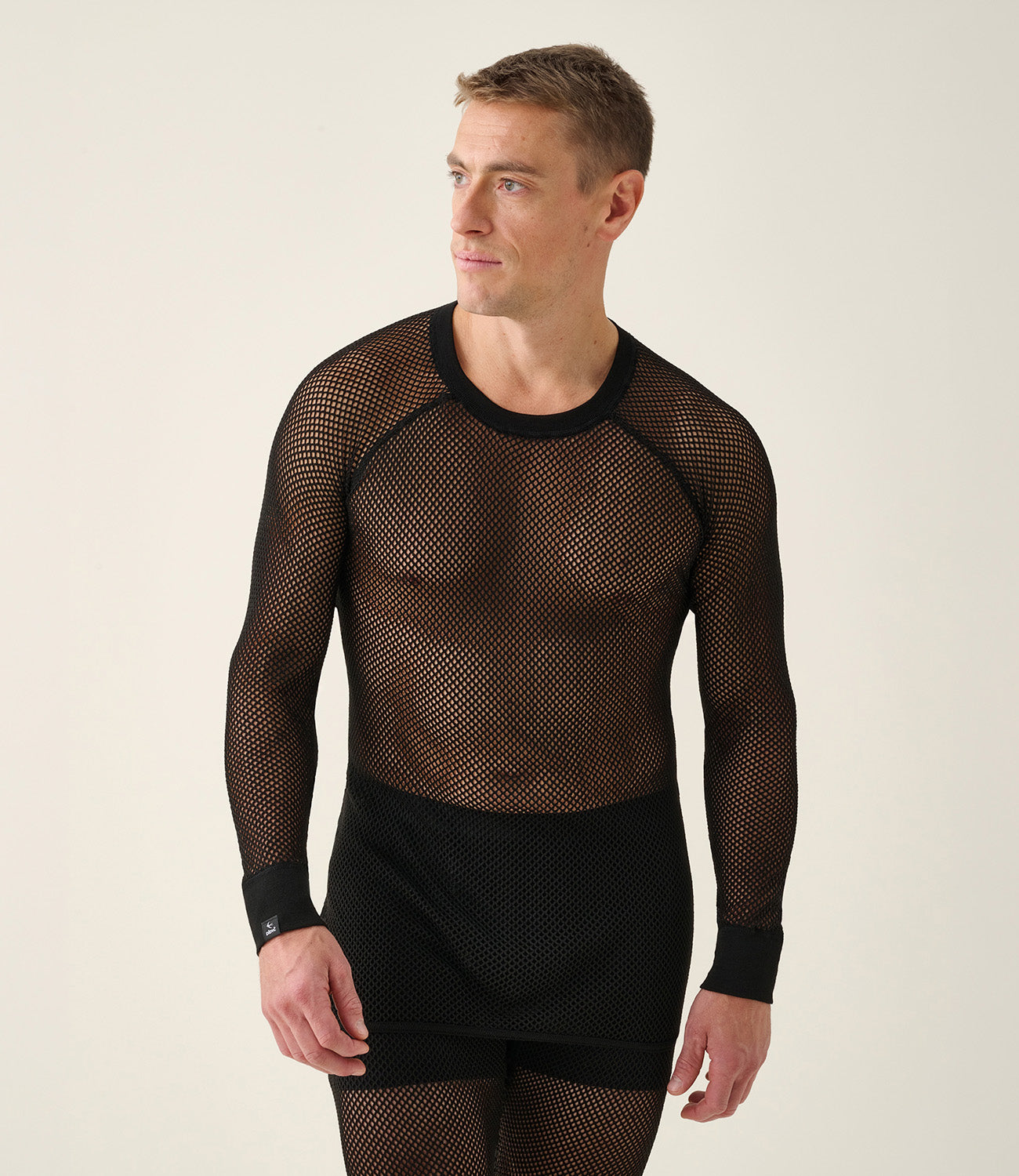
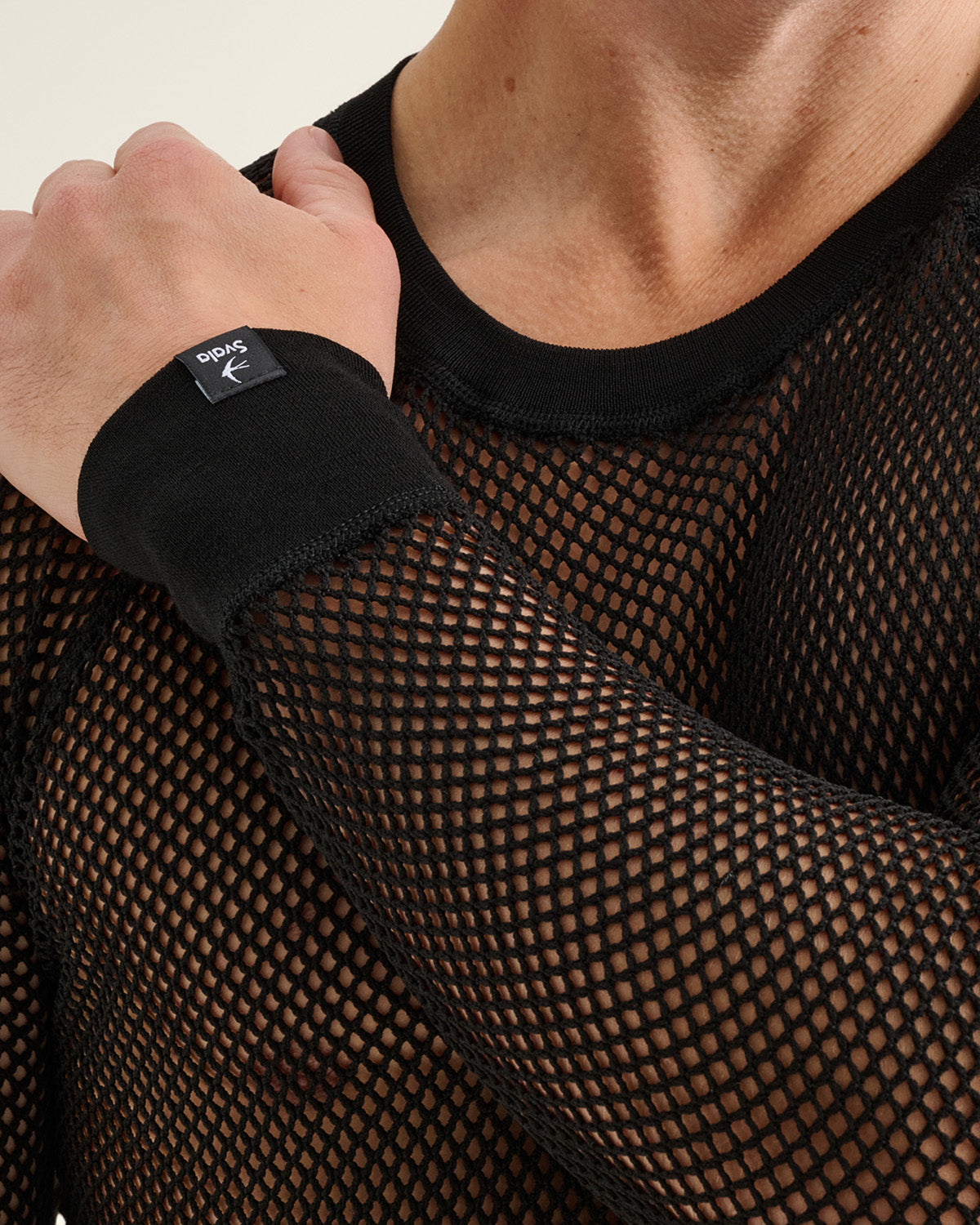
That is why an Airbase mesh shirt goes next to your skin, and in cooler weather Airbase mesh bottoms too. Airbase is 100% polypropylene, which does not absorb moisture but moves it from your skin to the next layer. The loops of Airbase's 120 g/m² 3D mesh knit trap a thin layer of air against your skin: while you pedal it cools you, and during breaks it insulates and keeps your skin warm. Because the fibre does not absorb water, the shirt often dries while you ride after a shower.
Airbase has a silver-ion treatment in the core of the fibre, so the shirt does not easily start to smell. That is why one Airbase is enough for a tour: at camp you can hang it on the handlebars or in the tent porch to air overnight, and in the morning it is ready for the next stage.

Men's Original Airbase 120 mesh set

Women's Original Airbase 120 mesh set
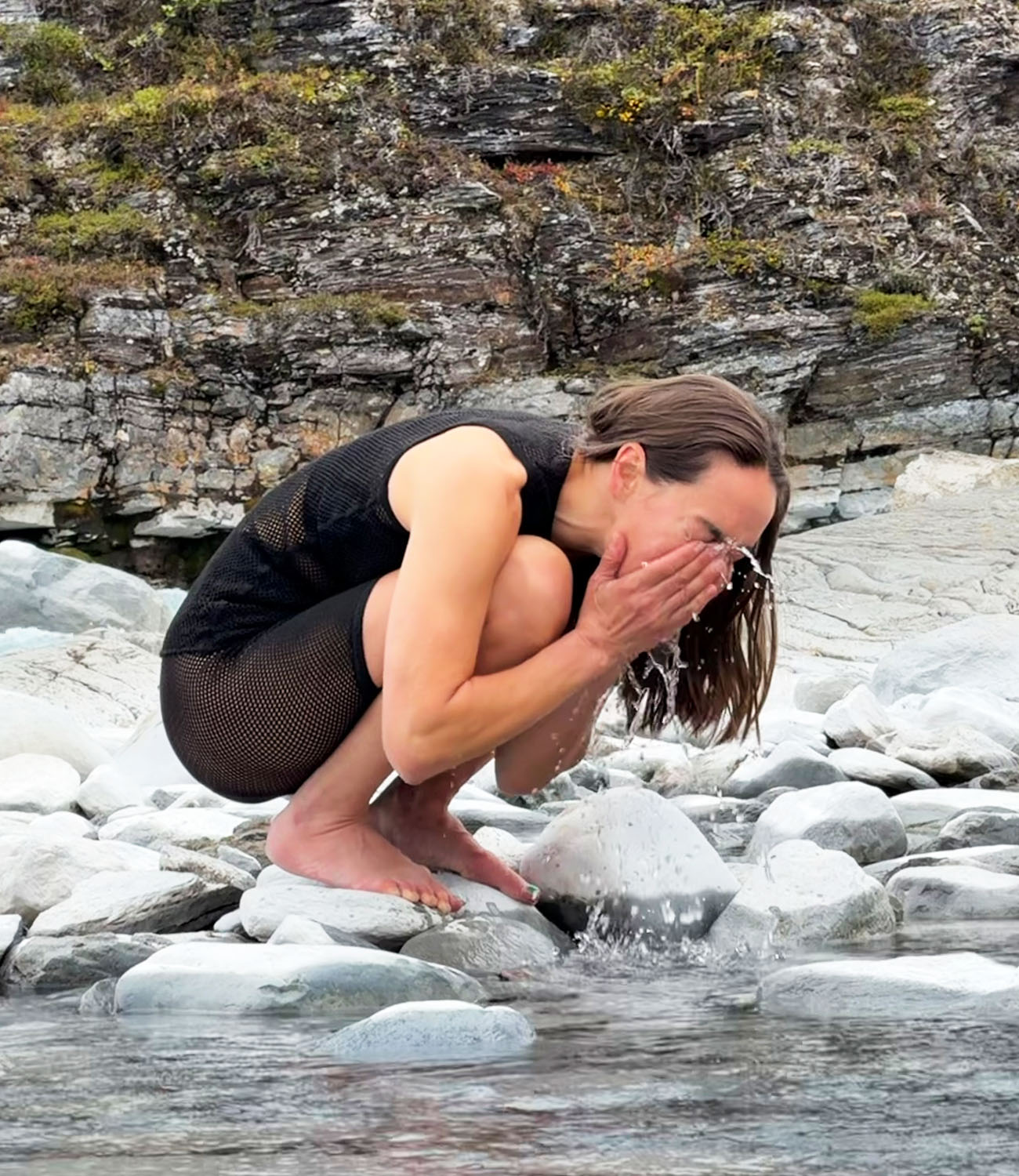
“When I load my touring kit onto the bike, the properties of my clothing matter even more: lightness and packability, breathability, warmth. When you set off bikepacking, everything has to be optimised and you carry nothing unnecessary, so layering really is key. I go on trips all year round, so I cannot always hang my top on a radiator to dry. The fabric has to be the kind that dries easily even while you are wearing it.”


Base Layer – Temperature regulation
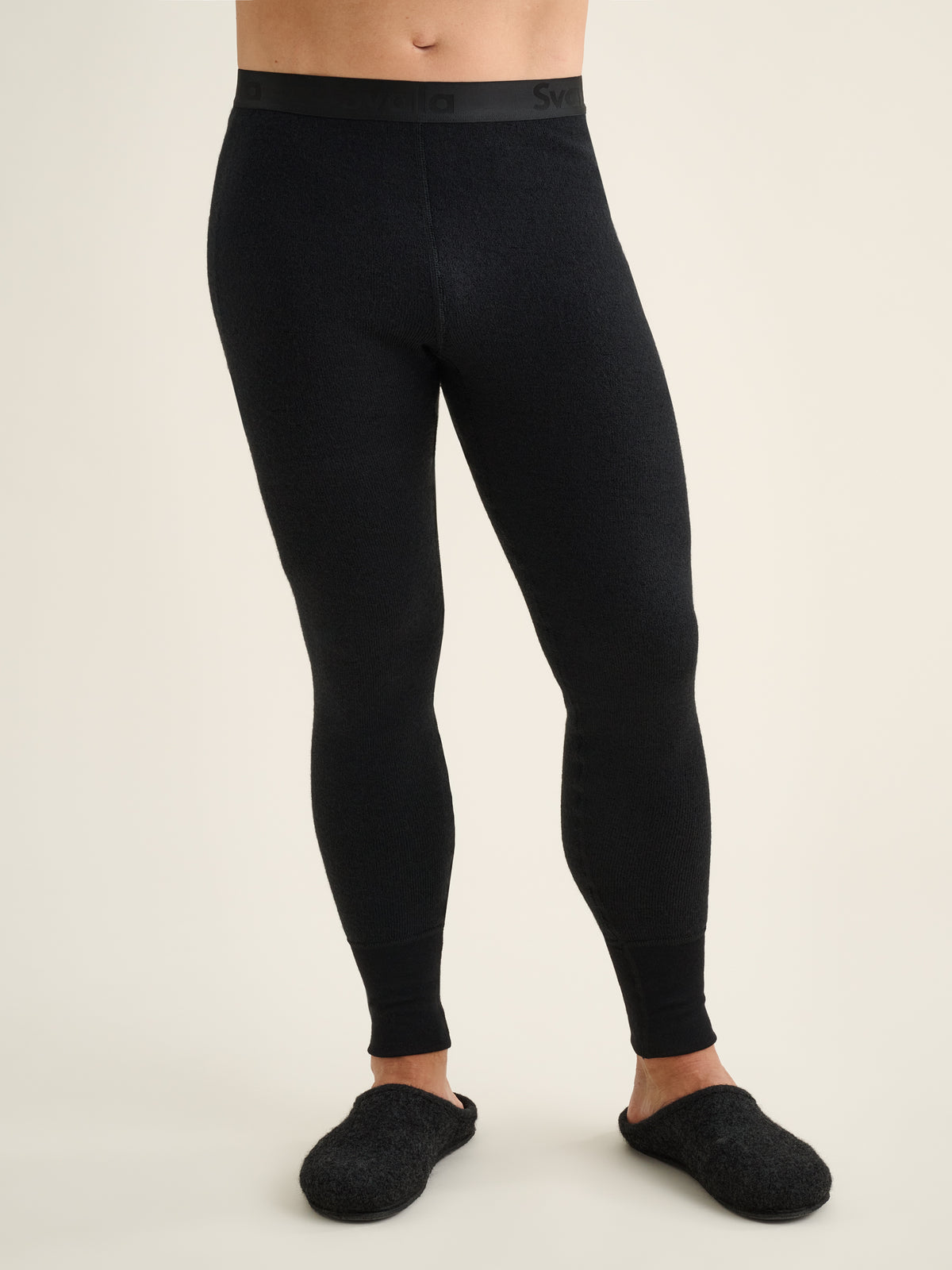
When the weather cools, moisture transport alone is not enough. A Merino Extreme base layer top goes over Airbase, and Merino Extreme base layer bottoms too if needed. In the double-layer construction, the polypropylene on the inside moves moisture onwards and the merino wool on the outside insulates. Merino wool absorbs moisture into the fibre and releases it gradually, so it evens out moisture and temperature close to your skin and does not feel wet straight away.
The same base layers work on a chilly morning start, a hot afternoon and a cooling evening at camp: when the weather warms up, you do not overheat. When you sweat heavily, even merino can get damp, and that is exactly why Airbase goes underneath.
Merino's biggest advantage for cycle tourers is that the same base layers do many jobs. Kept dry in your bag, Merino Extreme becomes your camp layer in the evening and your sleeping bag layer at night. Merino wool is naturally odour-resistant, so airing it is enough to keep it fresh from one stage to the next.

Men's Merino Extreme 200 base layer set

Women's Merino Extreme 200 base layer set

Mid Layer – Thermal insulation
The coldest moment of an evening at camp often comes only once the tent is up and you sit down to eat. Your body's own heat production drops quickly, and two thin layers are no longer enough. The same happens in the morning, when you pack your bags in a dewy camp and ride the first kilometres before your body has warmed up.
That is why the Polartec Alpha™ hoodie goes over the merino. Its lofty fibres and breathable mesh core regulate warmth and move moisture, so the layer insulates without feeling stuffy, even if you keep the hoodie on for the first kilometres of the morning. The hoodie packs down small, so it travels in your bag for the whole trip.
On a hot July tour you can leave this layer out, but in spring, in autumn and on the fells the night can drop below freezing. Then you also pack the Nordic Terry Wool mid-layer set for camp: the loops of its wool terry trap air and insulate while you sit still.

Men's Polartec Alpha 90 hoodie

Women's Polartec Alpha 90 hoodie

Shell Layer – Weather protection
On a multi-day tour, you will often hit a rainy day, and a shower can catch you mid-stage. Then you can get wet from two directions: from the outside through rain and spray from the wet road, and from the inside through sweat as you pedal for hours in a rain jacket. Even on a dry day, a headwind on an open farm road or on the coast takes your warmth away.
Cycle tourers have many opinions about shells. Some ride with a packable membrane jacket and rain trousers, others with a breathable shell, accepting that heavy rain can get through. A roomy shell fits Airbase, Merino Extreme and, if needed, the Polartec Alpha™ hoodie underneath. The air trapped between the layers insulates and keeps you warm.
Svala's own Shell Layer, the Ventile 200, is a membrane-free jacket made from very tightly woven long-staple cotton. When it gets wet, the fibres swell and the weave tightens, so the fabric repels light rain and showers and breathes without a membrane. For constant heavy rain, a technical waterproof shell and rain trousers are a more practical choice. Because Ventile is not just a cycling jacket, the same shell also goes with you on other trips and everyday outings.

Men's Ventile 200 jacket

Women's Ventile 200 jacket

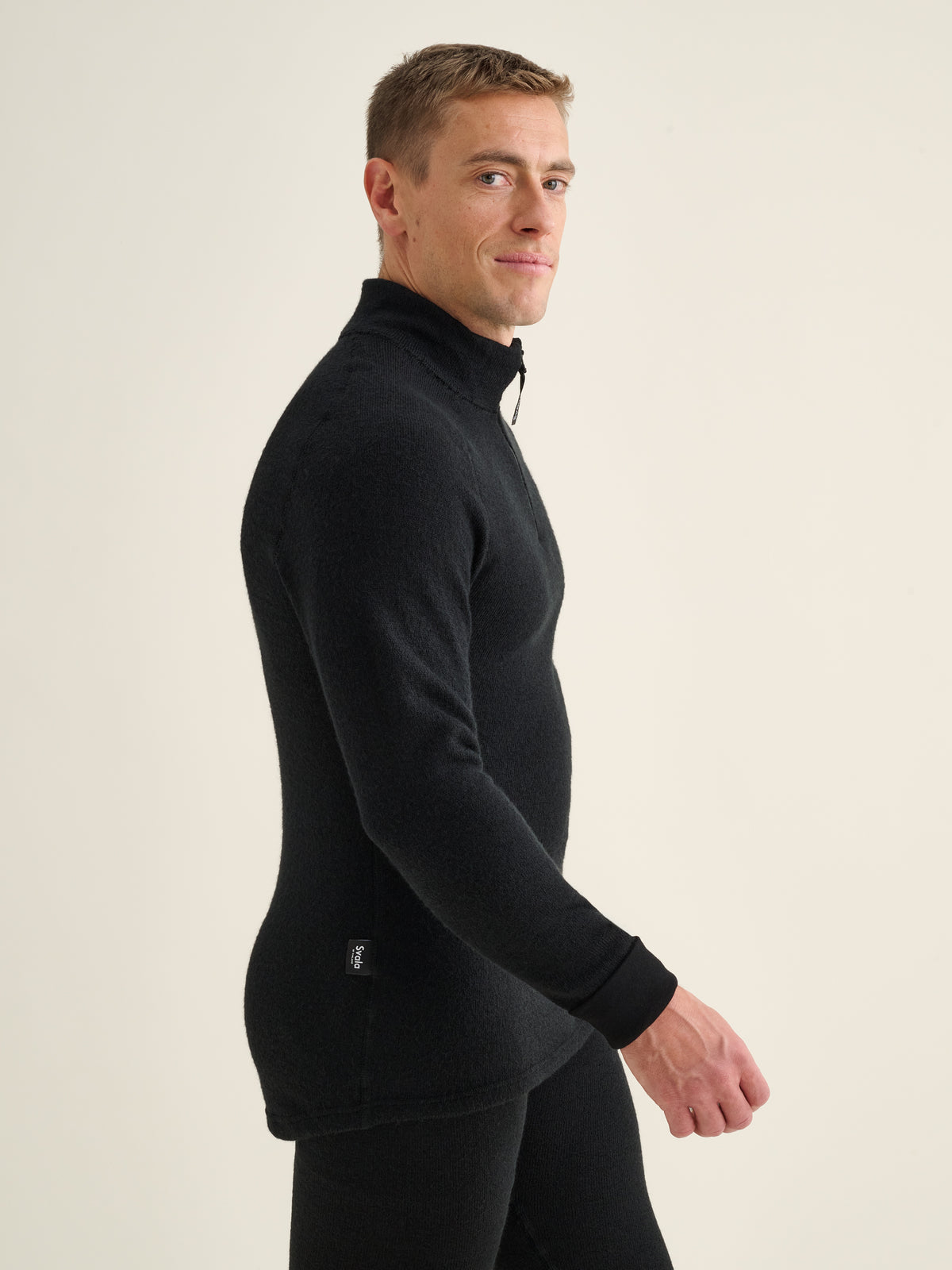
You do not need everything at once – start here
The system works best when you wear your layers to suit the weather and your pace, but you do not need to buy everything at once or replace your entire wardrobe. The AIR System™ also works with the clothing you already own. If you are starting from scratch, begin with the next-to-skin layer: it is the most important part of the whole system. Airbase next to your skin with merino on top forms a pairing that goes a long way on most trips. Because merino works both on the bike and at camp, it saves space in your bags if you count every gram.
If you already have a suitable layer, buy only what is missing:
- Do you already have a merino wool cycling jersey? Complement it with Airbase: wear the mesh layer next to your skin under the merino to stay drier than with merino alone.
- Do you already have Airbase and merino? For chilly evenings at camp, add a light Polartec Alpha™ hoodie that packs down small.
- Do you already have a shell jacket? There is no need to replace it. Make sure it is light enough to carry and that all the other layers you need fit comfortably underneath.
This way, you can build a light system that works at your own pace. Although we put these layers together for cycle touring, they will not sit in the wardrobe between trips: the same garments also work for commuting, day rides and other outdoor activities.

Four layers, one effective system
Layer: Zero Layer - next-to-skin performance